Marginalia at the End of the World
A couple months ago I visited a park called the end of the world. Its a small strip of New Orleans caught between an industrial canal, an abandoned navy base, and the Mississippi. A gargantuan tanker floats by the base just beyond the park’s border, apparently present for over a decade. It's a fixture until the city decides what to do with the military's remnants; A specter of death to veil a specter of death—redevelopment's steel flesh overshadowing militarism's cement bones. I describe the relevant park edge as a border because the base was surrounded by a barbed wire fence, an embarrassment which mainly functioned to exalt the graffiti coating the base's lower floors.
To reach the end of the world you must cross a defunct rail line and climb a berm. The water of the industrial canal creeps high on the bank, higher than the first floors of the surrounding neighborhood's houses. During Katrina water flowed easily over the dirt ridge. Flood waters reached depths of 10 feet. Those who lived in the region were displaced by wind and water but dispossessed by capital. Most were priced out of ward. The abandoned navy base is one of few structures to remain after the disaster. New Orleans carries its trauma with pride, but rarely in my visit were the scars so visible.
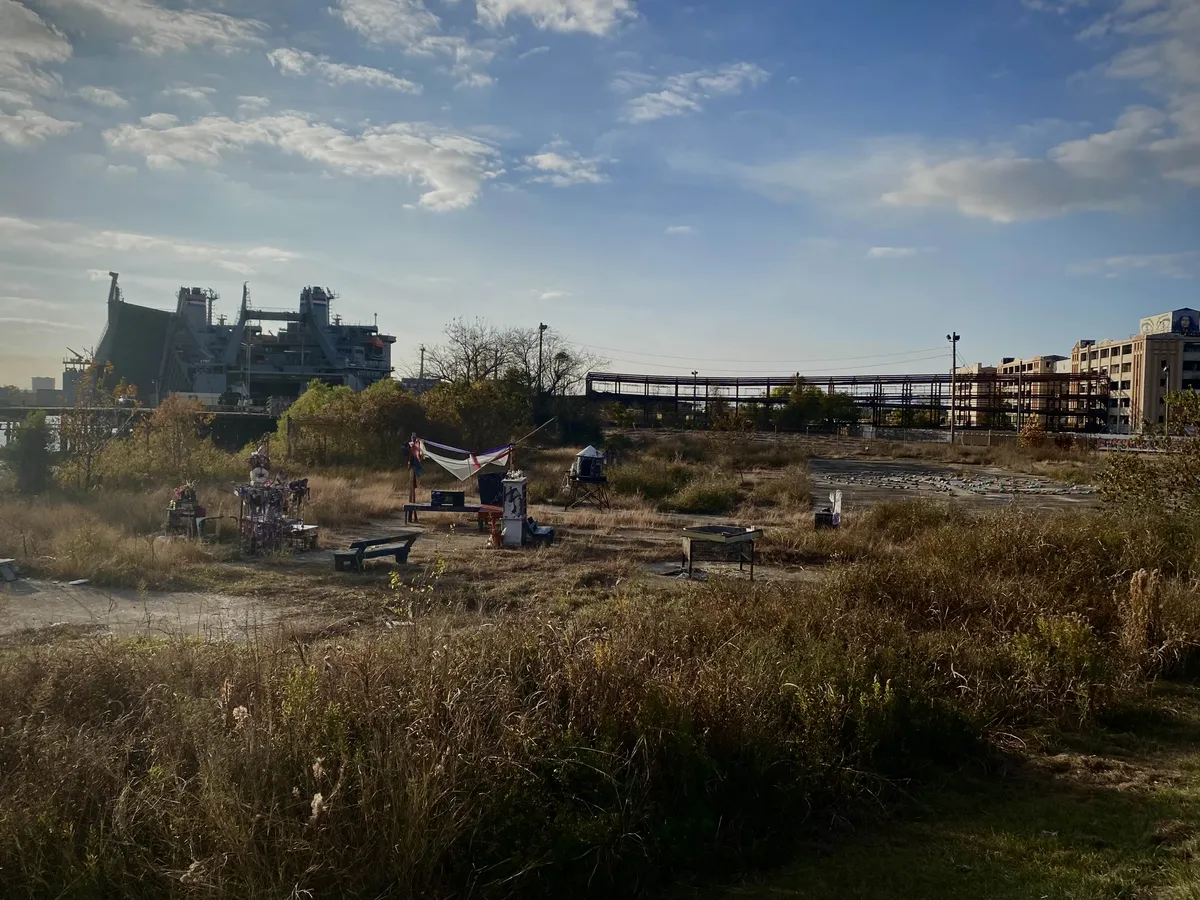
At the end of the world, where the land narrows to a point then disappears under polluted waters, there's a memorial of marginalia. Odes manifest as shrines, graffiti, and refuse: remembrances for dead queers.
Each memorial was holistically distinct to the person it honored. All featured the graffiti of many mourners. A similar tag was present on most, its lettering evocative of a constellation: "faggot." It was usually accompanied a heart or icons of anarchy. Love from and for the marginal, the dispossessed, those gone too soon.
Sometimes the end of the world is the only place you can be free.
The memorials stood on a broken cement field, weeds cracking the former military marching grounds. A labyrinth rested close, its winding path defined by shattered rock and garbage. No matter the time or circumstance one can always make space to clear their head. Adversity only increases the need. A bench on the edge of the memorial grounds had text scrawled across the seat: "Not yet. Don't go."
A soft light breath and ash to ash we wither under a boiling moon. Stay with me a little longer next time and I'll wax your shoes so that they may hold tight under these worldly waters. I am yours forever.
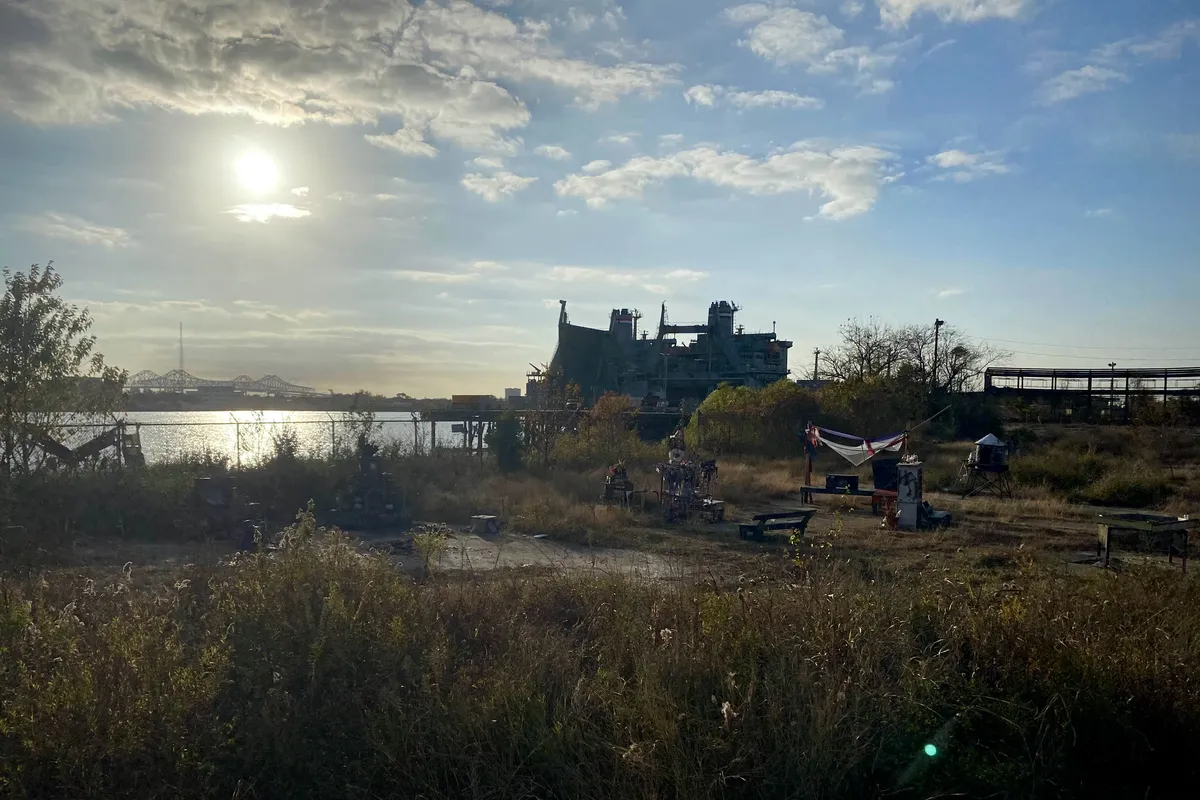
In the shadow of trauma (literal, metaphoric, and historic) marginalia persists. Despite all attempts at erasure the violence of the state cannot end the subaltern. No mass production of guns or riot gear, no cutting of aid or withholding of funds, no disenfranchisement or exploitation, no destruction of ecosystem, no radicalization—none of it mattered in the construction of these memorials.
I did not know these people, I never will, but I will live for them. Under the weight of a history of death all you can do is live. My highest hope is that, to some degree, they live on with me. In amongst innumerable snuffed marginalia.
I include no images of the monuments because this is not the end of the world. Not yet. These are not unprecedented times.
They can set fire to the ocean and blow the berms. They can rename the neighborhood and paint over the graffiti. They can legislate us out of existence and put ice down our throats. Still we will persist. Until the end of the world.
And there, at the end of the world, we will build memorials; We will live.